


Reporte hechos por la UNESCO apuntan que la planta de Moringa oleífera se puede encontrar en todo el mundo, tanto en los trópicos como subtrópicos. Sus frutos comestibles y las hojas son una característica de la dieta en la India, Filipinas, Senegal, Níger, Etiopía y muchos otros países.
Granos de semilla del árbol poseen floculantes naturales y son utilizados por personas en el Sudán para purificar las aguas turbias del río Nilo. En la India, la tradición sostiene que el árbol de Moringa puede curar 300 enfermedades, y los herbolarios locales hacen un uso extensivo de productos de Moringa para tratar una cantidad de enfermedades, incluyendo diabetes, úlceras, hipertensión arterial, edema de pedal y dolores renales.
 La planta de Moringa se cultiva en todo el Senegal, comúnmente visto crecer como un cerco vivo alrededor de los compuestos en los pueblos. Las hojas se cosechan periódicamente para hacer una salsa, localmente conocido bajo el nombre de mbum wolof.
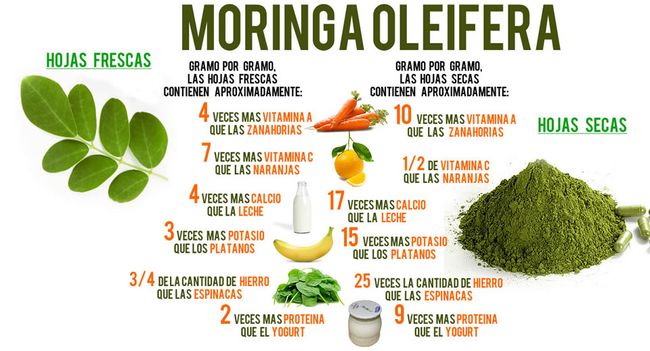
Por otra parte, los investigadores han sabido por años que estas hojas representan probablemente lo mejor de las verduras tropicales en términos de contenido nutricional. Los análisis de laboratorio de las hojas frescas y secas han demostrado que son una fuente muy rica de vitaminas A, C, complejo B y E, así como hierro, calcio, potasio, magnesio y selenio. Las hojas también contienen todos los aminoácidos esenciales, rara entre las legumbres.
PROPIEDADES MEDICINALES DE MORINGA
Según Fahey, J.W. (2005), el uso de la flor de moringa tiene efectos curativos medicinales , como:
Anti-Bacterial • Infección • Infección del Tracto Urinario • Virus de Epstein-Bar (EBV)
• Virus del Herpes Simple (VHS-1) • El VIH SIDA • Helmintos • Bronquitis tripanosomas • llagas o úlceras externas • Fiebre • Hepática • Lucha contra el tumor de próstata • Radio de protección anti-anémico • Anti-hipertensiva • Diabetes / Hypogclycemia • diuréticos • Hypocholestemia tiroidea • hepatorrenal • Colitis • Diarrea • Disentería • Úlceras / Gastritis • Reumatismo • Artritis • Dolor de cabeza • Antioxidante • Los carotenoides • Energía • Deficiencia de Hierro • Proteínas, vitaminas / la deficiencia mineral • Lactancia Enhancer • Antiséptico • Catarro • Lactancia • El escorbuto y Tónico • Caries dental o dolor de muelas • resfriado común • mordedura de serpiente mordedura de escorpión • Digestivo • Epilepsia • Hysteria • Factores Antinutrietional • • Abortivo Afrodisíaco • anticonceptivos • Asma • cardiotónico • Flatulencia • Antiespasmódico rubefaciente • • • • La gota vesicante Hepatamegaly bajos • espalda / dolor en los riñones • Esplenomegalia • • La sífilis tifoidea • Dolor de oído • infección de la garganta • Antihelmíntico • El cáncer de piel • dolor en las articulaciones • Verrugas • bocio.
Anti-Bacterial • Infección • Infección del Tracto Urinario • Virus de Epstein-Bar (EBV)
• Virus del Herpes Simple (VHS-1) • El VIH SIDA • Helmintos • Bronquitis tripanosomas • llagas o úlceras externas • Fiebre • Hepática • Lucha contra el tumor de próstata • Radio de protección anti-anémico • Anti-hipertensiva • Diabetes / Hypogclycemia • diuréticos • Hypocholestemia tiroidea • hepatorrenal • Colitis • Diarrea • Disentería • Úlceras / Gastritis • Reumatismo • Artritis • Dolor de cabeza • Antioxidante • Los carotenoides • Energía • Deficiencia de Hierro • Proteínas, vitaminas / la deficiencia mineral • Lactancia Enhancer • Antiséptico • Catarro • Lactancia • El escorbuto y Tónico • Caries dental o dolor de muelas • resfriado común • mordedura de serpiente mordedura de escorpión • Digestivo • Epilepsia • Hysteria • Factores Antinutrietional • • Abortivo Afrodisíaco • anticonceptivos • Asma • cardiotónico • Flatulencia • Antiespasmódico rubefaciente • • • • La gota vesicante Hepatamegaly bajos • espalda / dolor en los riñones • Esplenomegalia • • La sífilis tifoidea • Dolor de oído • infección de la garganta • Antihelmíntico • El cáncer de piel • dolor en las articulaciones • Verrugas • bocio.
FACIL METODO DE USAR LA MORINGA
La forma más fácil para sacar provecho de Moringa es tomar el suplemento dietético llamado Moringa Té. El Té de Moringa al hacer uso de la hoja seca preserva sus características, lo cual le da todas las ventajas de comer bien la moringa directamente de la planta. Este increíble producto se puede tomar con tan sólo 1 pequeña bolsita de té al día, que le da 1.500 miligramos de 100 hojas de Moringa % de pureza, hasta 10 veces más que los productos multivitaminas los cuales muchas veces salen mas caros.